

Into The Unknown
I thought rejecting the Princess trope was protecting my daughter. But after my mother died suddenly, I realized I had more in common with Elsa than I thought.

This piece was written as part of a grief memoir on which I’m currently working, but here I’ve adapted it into essay form. If you enjoy it or relate to it, I’d love if you’d share it with a friend or on social media. xx

My daughter is playing quietly in the living room when my mom asks me the question I’ve been anticipating for months.
“When are you gonna let her watch Frozen?” Her thick Mississippi accent makes her sound a-touch-too incredulous. We both gaze at my daughter, her cropped blonde hair swishing as she plays, lost in a world of pretend. She has just turned three and may be the only child on the planet who doesn’t yet know about Elsa and Anna. She’s never even seen a full-length movie.
“Mom, there’s plenty of time,” I say with the tone of impatience daughters are accustomed to using with their mothers. “One day she’ll come home asking to watch it. When she does, we’ll let her.” My mom frowns. I can see her turning over words in her head, but she says nothing. “Plus,” I continue. “The mom always dies in Disney movies. Why would I introduce this theme?!”
Mom shrugs. She knows this is a losing battle and I know she’s asking for permission to buy my daughter a lifetime supply of Frozen merch. My mom has always been a glutton for pop-culture kitsch.
Growing up, there was a revolving door of ‘80s and ‘90s trends that my mother willingly—no, giddily—brought into our home. When my brother wanted flip-up Dwayne Wayne glasses popularized in A Different World, she happily obliged. When I went through a Blossom phase, she swept me to the mall in search of Blossom hats. Beanie Babies, Trolls, chokers, Jams, airbrushed t-shirts, and checkered Vans—you name it, we had it.
Now as “Sitti,” her Lebanese-grandma name, my mom felt an obligation to ensure her grandchildren, too, would never be left out of a fad. But when it came to my daughter, I resisted.
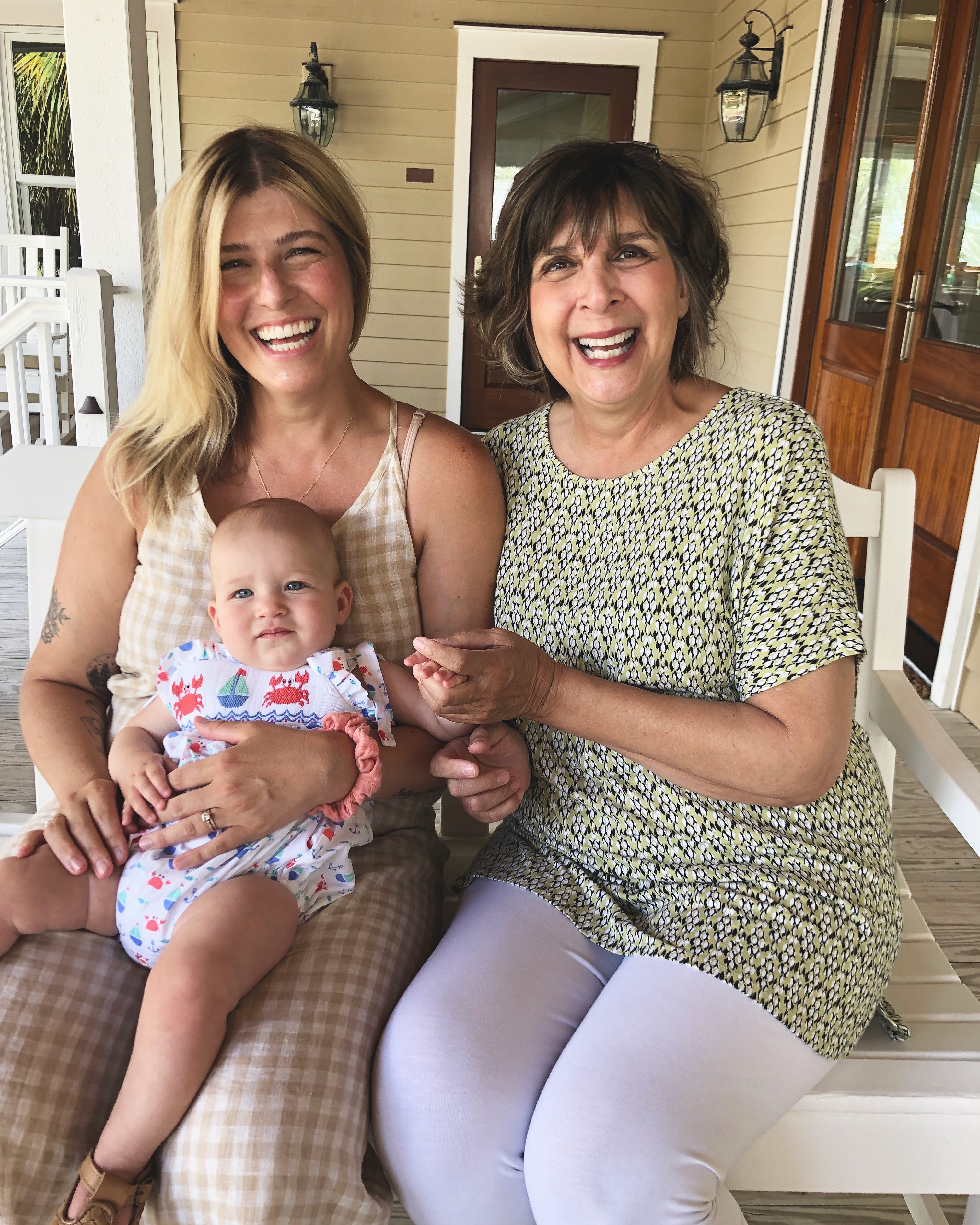
From the moment my OB/GYN uttered the words, “It’s a girl,” I had opinions. We would not use food as a weapon or a punishment, we’d tell her she was pretty but never emphasize it as a driver of her worth. We especially, no matter what, would never refer to her as a princess. If she wanted to wear pink bows and glittering tutus when she was old enough to choose, fantastic. But we would not push stereotypes on her before that. For this reason, Disney was our enemy.
I’d heard the newer films, Moana, Mulan, even Frozen, were less patriarchal in nature, but the Disney I knew adhered to outdated ideas of womanhood. The Disney I’d loved as a child taught me that women were objects to be won, had fit-model figures, and that falling in love was a matter of who fought hardest to save you. I’d be damned if the first romance my daughter ever saw centered on some aloof red-headed mermaid who gives up her voice for a man.
Back home in Mississippi, my mom threw me a baby shower—a Covid affair in which she’d hand-packed goodie bags of pink N95 masks and hand sanitizer. I was opening a gift, maybe a book or stuffed animal, when a friend’s mother blurted out sarcastically, “Thank God it’s not a giant bow, right, Deenie?” The eyes of my high school girlfriends fell heavy on me as they waited for an explanation.
“What’s wrong with bows?!” my friend, Jessica, asked. Her bright blue eyes pried at me beneath a coiffed mop of blonde curls, her Ole Miss degree never more present.
“Bows are fine!” I feigned, stumbling through an explanation. “It’s just…you know…some of our friends don’t even subscribe to gender roles…we just…we want to strike a happy medium and…”
“So, like, no bows at all?” Jessica was stumped.
“What do you mean they don’t believe in gender?!” another friend asked. “How is that even possible?”
I’d said too much.
“No, no, we’ll let her wear bows! We just want her to decide those things,” I said, losing confidence. I promptly turned everyone’s attention back to the pile of pink-and-white-wrapped gifts.
I realized how stupid I must have sounded, as if my daughter would burst from the womb ready to choose between a plush magenta bow or something of the gender-neutral variety. Perhaps a beige-colored beanie. More-so, I realized how far from home I’d strayed. Here I was talking about gender as a construct when everyone knew damn well I’d grown up playing Barbies and getting my ears pierced at Claire’s just like the rest of them. But having grown up within the confines of the Deep South’s many unspoken rules about how a woman should look, dress, behave, talk, stand, sit, chew, sip, and walk, I wanted something different for my daughter.
I’d made it my nature to rebel. First, I went out of state for college—a choice that, to some southern mothers, was the ultimate slap in the face. Then I had sex before marriage. When I told my mother about my lost virginity, too wrecked by guilt to keep such a wily secret from her, she hung up on me. Next, I moved to New York City at 22. She spent 11 years asking me to come back home. Then I said words like “fuck” in front of my wincing mother as if I’d effortlessly done so all my life (I had not). Eventually, I all but abandoned wearing makeup, which is a cardinal sin in Mississippi.
I didn’t want my daughter to feel the need to reject other people’s ideas simply to prove a point, like I had. Tattoos, pink hair, articles in national publications in which I purposefully pushed boundaries that would make readers, parents in particular, squirm in their seats: They were all thoughtful strategies to destroy the “good girl” persona everyone had assumed of me. Since my early 20s, I looked for ways to prove people were wrong to believe I could be summarized into the one-dimensional “girl next door.”
Instead I wanted to be seen as a woman on fire, unafraid to light a match regardless of what it burns. So decades later, I refuse bows for my daughter and shield her from Disney movies because I don’t want to shut her inside the boxes I spent decades breaking down. Predictable narratives, I’d learned, are the death of authenticity.
But my small acts of rebellion weren’t my mom’s fault. She only raised me as she’d been raised: To be polite; hold the door for my elders; understand the ins and outs of a table setting; never talk about money; never ask a woman her age; don’t wear white after Labor Day; look people in the eye when they’re talking to you; sit with your shoulders back; cross your legs like a lady; keep your elbows off the table; always say “please,” “thank you,” “yes, ma’am,” and “yes, sir”; always wait for the boy (always a boy) to ask you out first; always leave a space cleaner than how you found it; always offer to pay when friends’ parents take you to dinner; and never leave home without your “lips.”
But there was something peculiar about my mom’s obedience. It’s that she, too, was full of fire. For all her submissiveness, there was a quiet “fuck you” about her that she did not dare eek aloud. It simmered in her, and only those closest to her knew what bubbled beneath the surface. Though it was rare, she could be untethered, wild-eyed, and seething. But she only went so far. Rules were rules and my mother was a product of her culture.
By the time she hit her 70s, she knew she’d compromised parts of herself for others. I could hear it in the small, offhanded ways she talked down of conservatism or spoke up about LGBTQ+ rights. She was trying to make up for all the times she’d stayed quiet. Too often she complied for fear of being called “difficult.” She didn’t know any other way, but she knew upending the status quo would skip her generation. She wanted it to be me.
When I boldly declared opinions or confidently rejected cultural expectations, my mom would say, “I always knew you’d break the mold.” She said this with a tenor of awe, as though she were perplexed at how she, a mere mortal, had been anointed the mother of a shooting star. “How did I get so lucky to be your mom?” she’d ask with wonder in her eyes. The way she looked at me was like being seen by God, a gaze with which no romantic partner could ever compete.
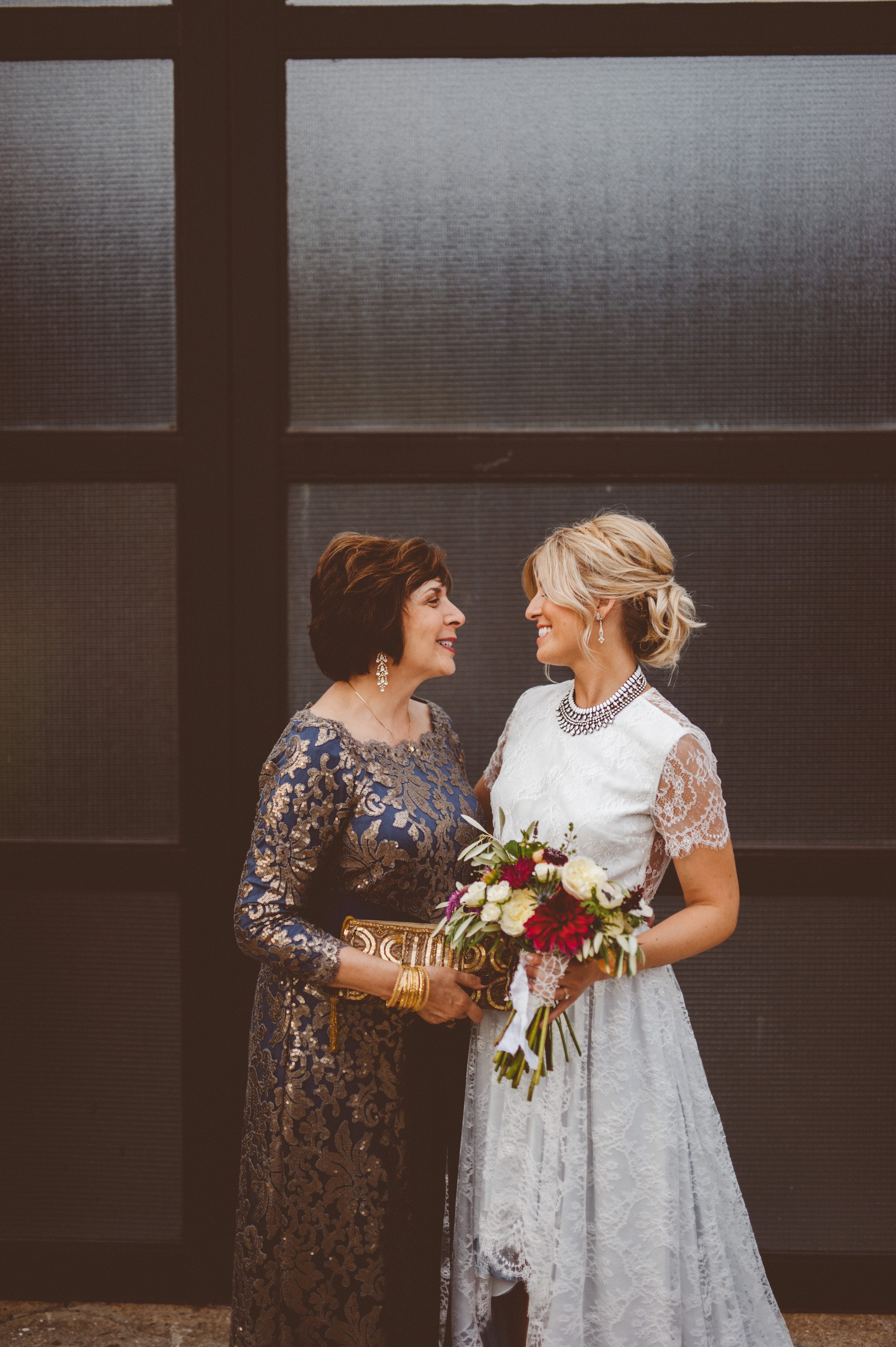
I see now that perhaps she felt for me what I feel for my daughter: She did not want me contained. She wanted me to live the life that she did not seize. She worked with what she knew, within the walls of rebellion from which she was comfortable stepping. She showered me in light and hoped that, maybe with each generation our flames would grow higher.
Then, days after the birth of my son in February 2024, it happened. We were lazing in my living room, soaking up the winter sun that poured in through our big-picture window. My husband plucked a dreamy soundscape on his acoustic guitar while our daughter twirled in an imaginary ballet. My mom, in town for the next six weeks to help with the kids, quietly encouraged her. Then my daughter looked at me mid-waltz and said, “Do I look like Elsa?”
Our fortress had been infiltrated.
I cut my eyes to my mom, who was already beaming. “Ohhhh, wow, yes,” I said, trying to sound both unaffected and impressed. “You look just like Elsa,” I affirmed, reading the expectation in my daughter’s eyes. I didn’t know how she finally learned their names, but it didn’t matter. The spell was broken, the floodgates opened, and we entered a new world. We had no idea, though, that this world would feel as foreign as fiction.
A few days after the Elsa incident, only nine days after the birth of my second child, my mother collapsed from a cardiac arrhythmia in the guest room of my home. Nine days after a C-section, I was on my knees, pounding her chest while I sobbed on the phone with 911. Nine days after she held her last grandson for the first time, she never saw him again. She was revived by EMS in my guest room and shuttled to the hospital—the same hospital that, nine days earlier, I welcomed my son.
That night in ICU, I sat in the dark with my breast pump; my son needed to nurse every 2–3 hours and I didn’t know what the next few days were going to look like. Beneath the yellow hazmat-like covers we were required to wear, I pumped and stared at a body in a bed. There was someone who used to be my mom, now in hypothermic protocol, intubated with tubes spewing from her mouth.
My brother arrived by 8 a.m., my dad by the afternoon. For 33 days we listened carefully as doctors spoke gravely through their masks. We texted nurse friends to help us decipher medical jargon. For 33 days, we made plans on how to care for her “if she woke up.” Then we made plans to transfer her to hospice. Finally, we made plans for her funeral. She died on March 11.
On the flight home to bury her, I wept silently while my six-week-old son slept in my arms. I floated like a ghost through the airport, hoping my husband was keeping eyes on our three year old, wondering how something as vibrant as my North Star could diminish so quickly. But motherhood doesn’t stop for grief. The kids needed mothering. They continued growing, touching, asking.
We had to explain to our daughter, who still wondered why Sitti wasn’t there anymore, that Sitti was dead. No, she’s not coming back. I choked through honest, age-appropriate explanations of death, but while nursing my newborn, I’d sob over his fluffy blonde hair. When reading to my three-year-old, my voice quivered at the simplest narratives. A month later, I went back to work. My maternity leave was up.
***
In the months following my mother’s death, while my daughter was falling deeper in love with the world of Frozen, I was angry at what had been taken from mine. Sometimes when I was alone in the car, I’d sob until the snot pooled at my lips, until the road was so blurry I wondered if I ought to pull over. Then for a moment I thought it wouldn’t be so bad to slam my car into a light post, the crunch of metal a dramatic ending to my flurry of rage and tears. Maybe I’d see my mom again.
I wasn’t angry at her for dying. I was angry at my mother for loving me so much. Furious I’d known the glow of her adoration and that it had been snatched from me, blown out like a candle. It wasn’t just the absence of her that sent me reeling. It was the vacancy of her all-encompassing, unconditional love. Something so alive it had its own pulse. My mother had been reclaimed by earth and space, and I didn’t know whether to look for her in stars or soil. Without her approval and guidance, I didn’t know how to be me.
In an effort to find her by any means necessary, I started seeing psychic mediums. They channeled messages to me “from her.” I read books on near-death experiences and reincarnation. I talked aloud to her on long walks. I wasn’t sure how to reach her, but I had to try.
It wasn’t long before I decided to write my way to her. A book. Essays. Anything. It was the only way forward. I’ve been a writer all my life. It’s was the only way I knew how to access myself, and hopefully, her, too. Every day I prayed that the words would come. I scribbled down vivid memories of my mother. I made notes about our conversations on my phone. In this way, I could keep her alive. What was my purpose, my identity now, without her? I begged the universe for answers and prayed I’d be humble and open-minded enough to see them.
I didn’t want to be like the Drowning Man, a parable in which a man, in some versions a preacher, is trapped by the town flood and prays to God to save him. As the waters rise, someone floats by in a canoe and offers the man a spot. He says, “No, I have faith that the Lord will save me.” Still the flood swirls and the man continues to pray. Another person speeds by in a motorboat, encouraging the man to join him; the water is only gaining height and speed. The man insists, “No, the Lord will see me through.”
Then the levee breaks. The man clings to the steeple of the church, water now covering his entire town. A helicopter appears, a ladder is dropped, and from a megaphone someone shouts, “Grab the ladder! This is your last chance!” The man, yet again, denies assistance, assuring them that the Lord will come to his rescue. Naturally, the man drowns.
When he meets God in heaven, he asks, “God, I had unwavering faith in you. Why didn’t you save me from the flood?” God simply shakes his head and says, “What did you want from me? I sent you two boats and a helicopter.” Though I abandoned conventional religion decades ago, I knew better. If there was a chance God might tell me what to do with myself, I was going to listen.
By summer, Frozen had wrapped its icy grip around the entire household. My daughter slept with Elsa and Anna dolls, had a Frozen lunchbox, and that Halloween, we’d even Trick or Treat as a Frozen family. When I tried to fall asleep at night, Idina Menzel’s voice cracked like waves against the inside of my skull. It was psychological warfare.
I had to admit, though, there was something about Elsa’s character that I couldn’t dispute. She was headstrong. She didn’t take “no” for an answer. She’d stop at nothing to get what she wanted. Which, turns out, is a common theme in many Disney princess movies. I may disagree with how and why Ariel achieved her goal of becoming a human, but she was determined nonetheless. Moana and Mulan, both warriors, were kind and empathetic stewards of their communities. They were…brave. Maybe I’d been viewing them through the wrong lens all this time.
Then one Saturday morning, folding laundry on the edge of the couch, I am sucked into Frozen 2, somehow watching it for the first time. Early on, Elsa is beckoned by an unknown voice. She ignores it. But the siren song persists, and Elsa sets off on a journey to find out why something—or someone—has been calling to her.
“You are the answer I’ve waited for all of my life,” she sings as she darts through an ice castle, peeking around each chiseled corner. Her platinum hair and glittering gown whip left and right as she stops at nothing to uncover the voice.
Then my stomach begins to churn. The closer Elsa comes to her siren, the tighter my throat grows. She sings powerfully, the violins shriek, and a crescendo rises into a signature Disney swell until—BOOM!—the memories of Elsa’s past project onto the inside of an icy globe surrounding her.
And there is Elsa’s mother. All this time it was her, calling Elsa home, sending Elsa toward herself. Queen Iduna sings, “Come my darling, homeward bound,” to which Elsa responds, “I am found!” Then—another great ice explosion!—and mother and daughter sing together, reunited in pristine harmony.
Show yourself!
Step into your power!
Grow yourself!
Into something new!
At that moment my husband enters the living room to find our daughter, eyeballs transfixed on Frozen, and his wife sitting still as a statue, mid shirt-fold. My face is completely damp. I look at him with tears still rimming my eyes.
“You didn’t tell me it was her MOM!” I yell. I bury my head in my hands, feeling utterly unhinged that a cartoon has pulled at my heartstrings so violently.
“Oh—you didn’t know?!” he says.
“No!” I shriek. I take a deep breath and then I laugh, whether to release the pressure or stop crying, I’m not sure.
“Woof. Yeah, that’s a tough one,” my husband says with a sympathetic chuckle.
He was accustomed to seeing me cry at random times of the day. But my husband, who’d heard the thud of my mother’s body hit the floor, who called 911, who followed the ambulance, met my grief each night with a quiet hug, protected me from the menial tasks of everyday life as long as he could, had cried on his own time. He’d already been confronted with Elsa’s memory of her mother. Maybe he’d been keeping Frozen 2 from me on purpose.
I wipe my cheeks and sit quietly as the film charges on, a tidy resolution brewing in Arendelle. But I can’t stop thinking about the look on Elsa’s cartoon face when she sees her mother. The recognition: Mother. The way her eyes soften with relief. How Queen Iduna reassures Elsa: You do not need to be contained. You are everything you need. Now Elsa can be certain of her purpose, her power. I finish folding laundry. I go for a walk with my kids. We go on with the menial tasks of our day. But I know from that moment forward: I will not be the Drowning Man. I am the Disney princess.
I really feel you in this feminine identity struggle. In some ways, I look at women who grew up with the restrictions your mother did with envy, because those restrictions can also be viewed in another way: as definitions, clear parameters by which to live a life and view the world. Similar to religion, they are limiting, yes, but that also provides some comfort in that you aren’t expected to reinvent the wheel, so to speak. There are so many possible ways to live one’s life today that it can feel overwhelming, at times, having to choose which path might be best for us and for our family, knowing that we are abandoning the paths not taken. We are all climbing Sylvia Plath’s *fig tree.
These days, I think it might be OK to admit that not everything of that generation was wrong and that there was some great wisdom there that we should be carrying forward to today.
I have always appreciated your honesty as a writer and it’s why I keep coming back to your work. Keep going, brave Princess Deenie!
Incredible!! Go, Deenie! Love you!!